Bowling Ball - REAL MONEY GAME
LongHuaGameSports
4.519.00 Reviews
- Version
- 1.0.1
- Installs
- 10.00K
- Age Rating
- Mature 17+
Screenshots
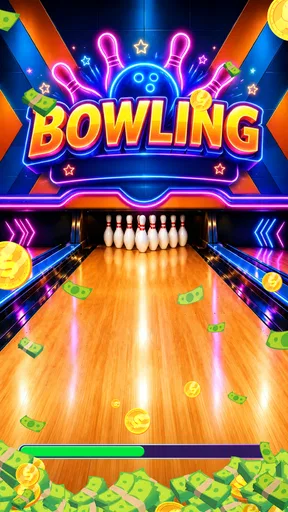
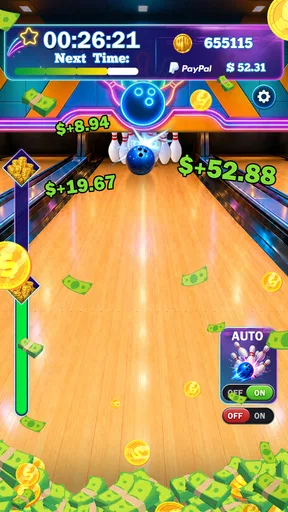
Our Review of Bowling Ball - REAL MONEY GAME
 Analysis by Appyee
Bowling Ball - REAL MONEY GAME caught my attention because it presents a very familiar sports activity in a compact mobile format: line up a shot, knock down pins, and see whether the result can translate into a cash-out experience. I found the basic idea easy to understand almost immediately, which matters on a phone where a game needs to communicate its purpose without a long learning curve. It is a free sports game from LongHuaGame, aimed at a mature audience, and its central promise is much more direct than that of a traditional bowling simulator.
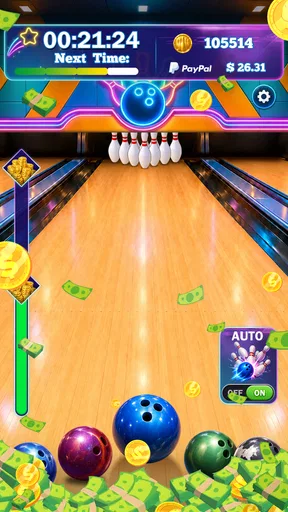
My first impression was shaped less by a large fictional setting and more by the focused mood of the lane. The game keeps attention on the relationship between the ball, the pins, and the outcome. That narrow focus gives each attempt a clear purpose, but it also means the experience depends heavily on whether you enjoy repeating a simple sports action while paying close attention to the result. I would not approach it expecting a full bowling career, a deep story, or a large multiplayer world. I would approach it as a quick, goal-driven bowling game with a real-money angle.
The store summary describes the experience in a few words: knock down pins and cash out real money. That wording is important because it tells you where the tension comes from. The appeal is not only the satisfaction of a clean strike; it is also the possibility that a successful run has a financial consequence. In my view, that makes the game more immediately engaging than a purely decorative bowling toy, while also making it a poor fit for anyone who dislikes money-related pressure in games.
How the lane, mood, and money-focused goal work together
I see the lane and the cash-out goal as two parts of the same experience: bowling supplies a familiar, easy-to-read challenge, while the money focus makes each result feel more consequential. That combination can sharpen an otherwise casual session, but it also makes pacing and self-control part of how I judge the game. Next, I’d look at whether the presentation and rhythm support that focused approach.
A simple first session with a sharper edge
The opening experience is approachable because bowling already gives most players a familiar mental model. You do not need to learn a complicated sports rulebook before understanding what you are trying to do. The lane creates a straightforward visual question: can I send the ball toward the pins with enough accuracy to improve the result? That clarity is one of the strongest qualities here.
At the same time, the mature 17+ content rating changes how I would recommend it. This is not the kind of casual bowling game I would automatically hand to a younger player. The money-related premise gives the activity a different emotional weight, and adults should treat the cash-out element as a central part of the product rather than a small extra attached to ordinary bowling.
One practical use case is a short break when I want something more focused than an endless scrolling session. A few attempts can provide a compact challenge because every throw asks for attention. I can imagine playing while waiting for an appointment or during a quiet evening, but I would avoid treating it as background entertainment. The real-money framing encourages me to stay alert to what I am doing instead of tapping through without thinking.
The game is free to download, which lowers the barrier to trying it. That does not automatically make it risk-free in the broader sense, however. Whenever a game connects performance with money, I think it is sensible to decide in advance how much time and attention I am willing to give it. My advice is to view the bowling challenge first and the potential cash-out second, not the other way around.
Art direction that keeps the action readable
Bowling works best visually when the lane, ball, and pins remain easy to distinguish. The appeal of this game comes from that readable arrangement rather than from a crowded screen or an elaborate fictional world. The setting feels functional: it frames the shot, gives the ball a destination, and makes the result understandable at a glance.
That functional presentation supports the game’s mood. A bowling lane naturally creates a contained space, and the limited setting helps the experience feel concentrated instead of scattered. I do not need to search through a large map or manage unrelated systems before taking a shot. The environment exists to support the decision in front of me.
There is a trade-off here. Players who want strong visual variety may find the focused setting less exciting over longer sessions. A conventional bowling simulator can offer more room for venue changes, character presentation, or a broader sense of progression. This game’s strength is that it does not distract from its central action; its weakness is that the same concentration may feel repetitive if the act of aiming and knocking down pins does not hold your interest by itself.
I also think the visual language is especially important because money-related play benefits from clarity. When the result matters, confusing decoration would work against the experience. A clean relationship between the shot and the outcome is more valuable than flashy presentation. That is where the game’s compact identity makes sense.
Sound and the rhythm of each attempt
Bowling has an obvious built-in rhythm: prepare, release, watch the ball travel, then react to the pins. That sequence gives the game a natural sense of pacing even without a complicated narrative. I found the pause between the throw and the result particularly important because it creates anticipation. The action is brief, but the outcome does not arrive at the same instant as the input.
The sound design, where it supports that rhythm, should be understood as part of the feedback rather than as decoration. The impact of the ball and pins is the emotional punctuation of a successful attempt. A quiet setup followed by a sharp result makes the lane feel more physical, while less satisfying feedback can make an accurate throw feel strangely flat.
This rhythm also explains why the game can be more absorbing than its simple premise suggests. A single throw contains a small cycle of decision and consequence. I decide how to approach the shot, commit to it, and then have to accept the result. When the possibility of cashing out is part of the context, that familiar bowling rhythm gains extra tension.
Still, the pacing is not designed for everyone. If I want a fast action game with constant movement, this may feel slow between meaningful moments. If I prefer calm, repeatable challenges, the measured lane-to-result pattern is more appealing. The best way to enjoy it is to let each attempt have its own space rather than rushing through a string of throws.
Where the mechanics fit the presentation
The central mechanic and the presentation are aligned because both stay focused on one question: how well can I control the ball’s path toward the pins? That alignment is valuable. A game can have attractive visuals and sounds but still feel disconnected from its controls; here, the bowling premise gives the screen a clear job.
For better results, I would treat each attempt as a small routine rather than relying on hurried reactions. I first look at the lane and decide what kind of shot I want, then I make the input deliberately, and finally I watch the complete result before immediately trying again. This approach helps separate a genuinely poor decision from a rushed one. It is also a useful habit when the outcome may influence a cash-out decision.
A less obvious trade-off is that simplicity can expose every weakness in the control experience. In a large sports game, an awkward input may be hidden among many other systems. In a focused bowling game, the shot itself is the product. If aiming feels imprecise, if feedback arrives too late, or if the result is difficult to read, the entire experience suffers. That is why I would spend the first session testing consistency rather than chasing the most exciting possible result.
I would also avoid confusing a good streak with proof that every future attempt will go the same way. Bowling naturally includes variation, and the money-focused premise can make players overconfident after a few successful throws. My practical rule is to judge the game by whether the activity remains enjoyable and understandable even when a shot does not go perfectly.
Who will enjoy it, and who should choose something else?
I think Bowling Ball - REAL MONEY GAME is most suitable for adults who like short sports challenges, understand the appeal of bowling, and are comfortable with a game built around the possibility of real-money cash-out. It may also suit players who prefer a concentrated activity over a broad sports package. The low entry cost makes it easy to explore without first committing to a paid download.
I would skip it if I am looking for a detailed bowling simulation with a long career mode, extensive customization, or a rich competitive structure. I would also skip it if the money element makes me feel pressured to keep playing after a disappointing result. In that case, a conventional bowling game without financial stakes would probably be the healthier and more relaxing alternative.
It is also not the obvious choice for someone who wants a social sports game first. A standard bowling title with local or online competition would be better if the main goal is to play with friends, compare elaborate statistics, or build a long-term identity around a team or character. This game’s appeal is narrower and more immediate: the lane, the throw, the pins, and the financial objective.
For a realistic everyday scenario, I can see using it during a short break with a fixed stopping point. I would play a few careful attempts, review whether the experience feels fair and understandable, and then close it rather than letting the possibility of a better result dictate the length of the session. That boundary matters more here than it would in a simple offline bowling pastime.
What the current release means for trying it now
The game currently appears as version 1.0.1, and it supports devices running Android 8.0 or newer. That makes checking the phone’s operating system a sensible first step before trying it. I would also make sure the device handles the game comfortably and that I have enough uninterrupted time to understand how the bowling and cash-out flow are presented.
Its audience is still relatively compact, with over ten thousand installs and an average score of 4.5 from around eighty ratings. There are also around twenty written reviews. Those figures suggest that the game has attracted a small but interested group, though they are not a substitute for deciding whether its particular premise suits me. I would read the written reactions for clues about the feel of the throws and the overall experience, while remembering that a money-focused game can produce very different reactions depending on the player’s expectations.
The developer is LongHuaGame, and the current release gives the product a clearly defined identity rather than presenting itself as a broad sports collection. I appreciate that focus, but it also increases the importance of personal fit. With only one central activity to return to, the game needs to make that activity satisfying enough on its own.
Small habits that improve the experience
My first tip is to use the early attempts as a calibration period. Instead of immediately thinking about the best possible financial result, I would pay attention to how the ball responds to each input and how clearly the game communicates success or failure. This makes later choices more deliberate and reduces the temptation to blame every poor outcome on bad luck.
My second tip is to separate entertainment time from cash-out decisions. I would finish a short play session, then consider whether I actually want to continue or withdraw, rather than making that decision in the emotional moment after a strike or a miss. This is a small change, but it keeps the game from turning every throw into an impulsive choice.
My third tip is to compare it with the kind of bowling experience I really want before settling in. If I enjoy the physical rhythm of aiming and watching pins fall, this focused format may be enough. If I need tournaments, detailed player development, or a large social layer, I should choose a fuller bowling alternative instead. Knowing that distinction early prevents disappointment.
I would also keep the mature rating in mind when sharing a device. Even though the bowling action itself is familiar, the real-money premise makes this unsuitable as a general children’s game. That is a practical consideration for families, especially when a phone or tablet is used by several people.
My atmosphere verdict
Bowling Ball - REAL MONEY GAME creates its mood through concentration rather than spectacle. The lane gives the game a contained visual language, the bowling impact supplies a natural sound-and-action rhythm, and the cash-out goal adds tension to an otherwise familiar sports activity. I like that these parts point in the same direction instead of competing for attention.
The experience is at its best when I treat each throw as a deliberate moment. Its simplicity makes the action approachable, but that same simplicity means repetition becomes the main limitation. There is no reason to expect the breadth of a full bowling simulator, and players who dislike financial pressure should not choose it simply because the download is free.
My overall recommendation is cautious but positive for the right adult player. If you want a compact bowling game with a money-centered objective and you are comfortable setting sensible limits around your play, it is worth exploring. If you want a purely relaxing pastime, a deep sports simulation, or a social bowling package, I would choose a different option. The strongest reason to try it is the focused tension of each throw, not the promise of effortless money.
Verdict
Strengths of Bowling Ball - REAL MONEY GAME
- Simple bowling gameplay that is easy to understand from the first match.
- Short rounds make it convenient for quick sessions on mobile.
- Competitive format can add excitement for players who enjoy head-to-head matches.
- Real-money rewards may appeal to users seeking more than casual entertainment.
- Familiar bowling mechanics make the app accessible to newcomers.
Limitations of Bowling Ball - REAL MONEY GAME
- Availability of cash games may depend on your country and local regulations.
- Entry fees can lead to financial losses, even for experienced players.
- Results may be affected by matchmaking, timing, and internet connection quality.
- Withdrawal rules, fees, and minimum limits should be checked before playing.
- Real-money gaming can encourage excessive play or impulsive spending.
Similar Picks in This Category
View All
8 Ball Pool
Miniclip.com4.8

Pooking - Billiards City
AIM TOP GAME TECHNOLOGY LIMITED - pool4.6

Carrom Pool: Disc Game
Miniclip.com4.4

EA SPORTS FC Soccer Mobile 26
ELECTRONIC ARTS4.6

World Soccer League
mobirix4.3

Soccer Cup 2026: Football Game
INLOGIC SPORTS - football tennis golf soccer4.3
Frequently Asked Questions
What is Bowling Ball - REAL MONEY GAME?
Bowling Ball - REAL MONEY GAME is a mobile bowling experience that may combine casual gameplay with opportunities to compete for real-money rewards. Players typically aim, release, and control a bowling ball while trying to achieve high scores or complete challenges. Before downloading, check the current description, supported regions, game modes, and whether the app’s rewards are available in your country.
Can I really win real money by playing Bowling Ball - REAL MONEY GAME?
The title suggests that the game may offer cash prizes, tournaments, or other monetary rewards, but winnings are never guaranteed. Eligibility, entry requirements, score conditions, prize pools, and withdrawal rules can vary. Read the official terms carefully before depositing money or entering paid competitions, and remember that gameplay involving real-money prizes may carry financial risk.
Is Bowling Ball - REAL MONEY GAME free to download and play?
The app may be free to install, although it can include optional in-app purchases, paid entries, advertisements, or other features connected with cash competitions. A free download does not necessarily mean that every mode is free. Review the store listing and the in-game payment screens before confirming a purchase, tournament entry, or wallet transaction.
How do withdrawals and payments work in the game?
Payment and withdrawal methods depend on the developer, your location, account verification requirements, and the platform’s current policies. You may need to reach a minimum balance, provide personal information, or complete identity checks before requesting a payout. Always confirm processing times, fees, supported payment services, and refund rules in the official terms rather than relying only on promotional claims.
Is Bowling Ball - REAL MONEY GAME safe for children?
Because the game appears to involve real-money rewards or paid competitive features, it may not be suitable for children. Financial transactions, age restrictions, identity verification, and regional gambling or competition laws may apply. Parents should check the app’s official age rating, enable purchase controls, and avoid allowing minors to use payment details or participate in cash-based game modes.
Play our best games!


